

Protect Your Stream: How to Secure Your Netflix and Streaming Accounts from Theft
In the age of endless entertainment at our fingertips, services like Netflix, Hulu, and Disney+ have become integral parts of our daily lives. We rely on them for movie nights, binge-watching new series, and keeping the family entertained. But with this convenience comes a hidden risk: the growing threat of account theft. Cybercriminals are actively targeting these accounts, creating an underground marketplace where your login details can be bought and sold.
No credit card required • Instant activation
Understanding the dangers is the first step toward protecting your digital life. This guide is designed to empower you with the knowledge and tools you need to master streaming account security Netflix scams and other threats. We'll walk you through creating strong defenses, recognizing malicious attempts to steal your data, and what to do if you suspect your account has been compromised. By taking a few proactive steps, you can ensure your streaming experience remains safe, secure, and uninterrupted.
How Are Streaming Accounts Stolen?
You might wonder why anyone would want to steal a streaming account. The motivation is simple: profit. Criminals sell access to compromised accounts for a fraction of the subscription cost on dark web forums and illicit messaging groups. They use several common tactics to gain unauthorized access.
Credential Stuffing
This is one of the most common methods. Hackers take massive lists of usernames and passwords leaked from data breaches at other companies (like a social media site or online retailer) and use automated software to ‘stuff' them into the login pages of streaming services. If you reuse the same password across multiple sites, a breach anywhere can put your streaming accounts at risk.
Phishing Scams
Phishing involves tricking you into voluntarily giving up your credentials. A scammer might send a fake email or text message that looks like it's from Netflix or another service. These messages often create a sense of urgency, claiming there's a billing problem or that your account will be suspended. The goal is to get you to click a malicious link and enter your login details on a convincing but fake website.
Malware and Keyloggers
If your computer or smartphone is infected with malware, it could contain a keylogger. This malicious software secretly records everything you type, including usernames and passwords for your streaming accounts, banking sites, and email. This information is then sent back to the attacker.
Your First Line of Defense: Unbreakable Passwords
A weak, easily guessable password is like leaving your front door unlocked. The single most effective step you can take to secure your accounts is to use strong, unique passwords for every service. A strong password is your primary barrier against unauthorized access.
Here are the core principles of password strength:
- Length is Key: Aim for at least 12-16 characters. Every additional character makes a password exponentially harder to crack.
- Complexity Matters: Use a mix of uppercase letters, lowercase letters, numbers, and symbols (e.g., !, @, #, $).
- Uniqueness is Non-Negotiable: Never reuse passwords across different websites. If one site is breached, all your accounts using that password become vulnerable.
- Avoid Personal Information: Don't use your name, birthdate, pet's name, or other easily discoverable information.
Managing dozens of unique, complex passwords is impossible for the human brain. This is where a password manager comes in. These secure applications generate, store, and autofill strong passwords for you, requiring you to only remember one master password. For more information on choosing a reliable option, CNET offers excellent reviews of the best password managers available.
| Characteristic | Weak Password Example | Strong Password Example |
|---|---|---|
| Password | jenny1995 |
j$p!R3-k&wD#vG7 |
| Length | 9 characters | 16 characters |
| Character Types | Lowercase letters, numbers | Lowercase, uppercase, numbers, symbols |
| Guessability | High (contains name and year) | Extremely Low (random characters) |
| Vulnerability | Can be cracked in seconds | Would take centuries to crack |
Activating a Digital Deadbolt: Two-Factor Authentication (2FA)
Even the strongest password can be stolen. Two-Factor Authentication (2FA), sometimes called multi-factor authentication (MFA), adds a crucial second layer of security. It requires not only your password (something you know) but also a second verification factor (something you have), usually a code sent to your phone.
If a criminal manages to steal your password, they still won't be able to log in without access to your phone. This simple step is a powerful deterrent against most account takeover attempts. Most major streaming services now offer 2FA. You can typically enable it in your account's ‘Security' or ‘Login' settings. For example, you can find instructions on the official Netflix help page for securing your account.
Spotting the Fakes: How to Recognize Phishing Scams
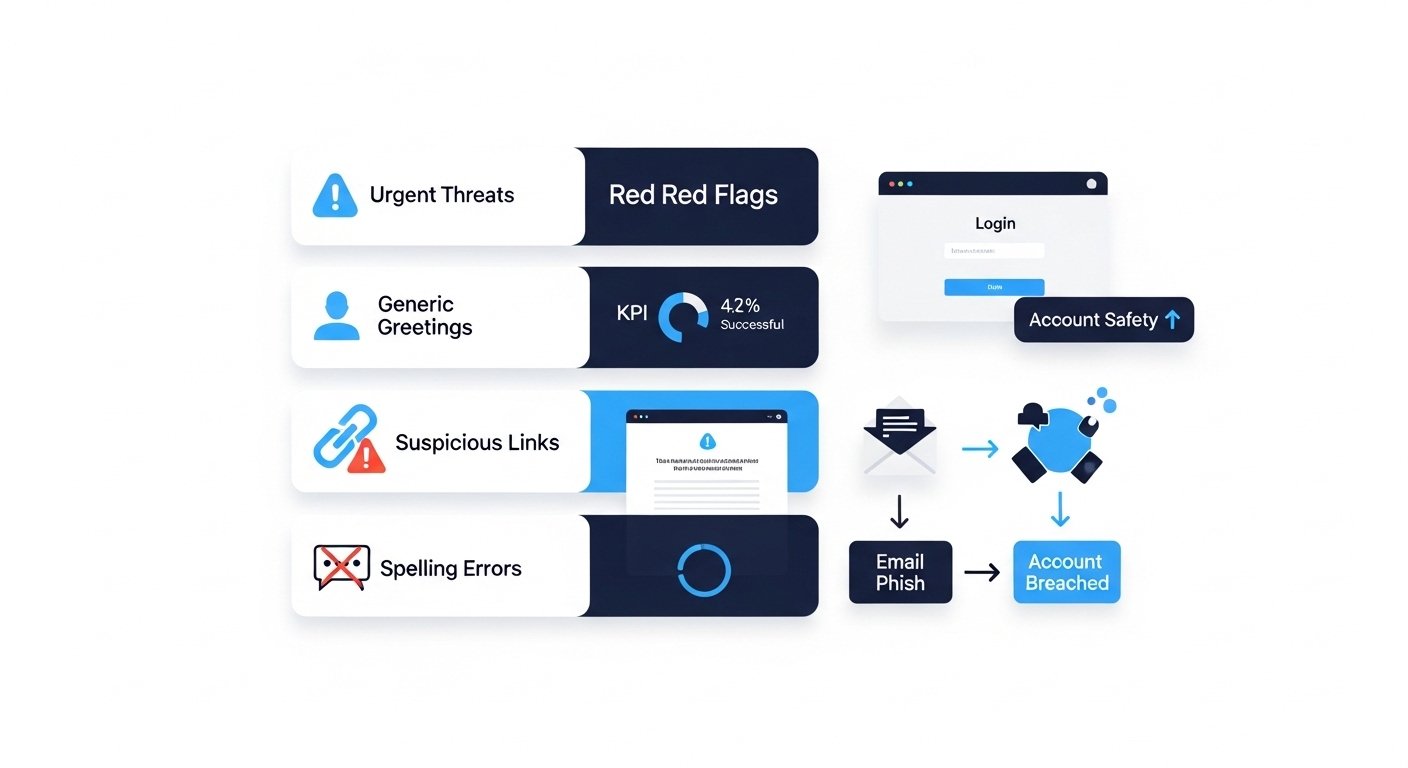
Vigilance is key to defeating phishing. Since these scams are designed to trick you, learning to spot the red flags is essential for improving your streaming account security Netflix scams awareness. Always be skeptical of unsolicited messages about your accounts.
Look for these warning signs:
- Urgent or Threatening Language: Scammers use fear to make you act without thinking. Phrases like ‘Your Account is Suspended' or ‘Immediate Action Required' are common.
- Generic Greetings: Legitimate companies will usually address you by name. A greeting like ‘Dear Valued Customer' is a red flag.
- Poor Grammar and Spelling: While not always present, many phishing emails are riddled with errors that a professional company's communications would not have.
- Suspicious Links: Before you click, hover your mouse over any link to see the actual destination URL. If it doesn't match the official website (e.g., it's a strange domain or a string of numbers), do not click it.
- Mismatched Sender Address: Check the ‘From' email address. Scammers often use addresses that are close to the real thing but slightly off, like ‘[email protected]' instead of an official @netflix.com address.
No credit card required • Instant activation
The Federal Trade Commission (FTC) provides valuable resources on how to recognize and report phishing attempts, which can help you stay informed.
While securing your existing accounts is vital, it's equally important to ensure you're using legitimate and legal streaming platforms. If you're exploring modern streaming technology and want to understand how it works in a safe environment, you can learn more with our educational resources. You can even sign up for a risk-free IPTV trial to experience how a fully compliant and legal service operates.
What to Do If Your Account Is Compromised
If you notice strange activity—like shows you haven't watched appearing in your history or receiving an email about a login from an unknown location—act immediately.
- Change Your Password: Log in and change your password to a new, strong, and unique one.
- Use ‘Sign Out of All Devices': Most services have an option in the security settings to remotely log out all active sessions. This will kick out any unauthorized users. You can find this on the Disney+ account security page and similar pages for other services.
- Enable 2FA: If you haven't already, turn on two-factor authentication now.
- Contact Support: If you are locked out and cannot change your password, contact the streaming service's official customer support immediately to report the issue and reclaim your account.
- Review Other Accounts: If you were reusing the compromised password elsewhere, change it on all those other sites immediately.
Frequently Asked Questions
Is it safe to share my streaming password with family or friends?
While common, password sharing often violates the terms of service of platforms like Netflix. From a security standpoint, it's risky. You lose control over who has your password and how securely they store it. It's always safer to use features like household profiles and avoid sharing your primary login credentials.
How often should I change my streaming passwords?
The old advice was to change passwords every 90 days. The modern consensus has shifted: it's more important to have a long, unique, and complex password for every single account, protected by 2FA. You should only change your password if you suspect it has been compromised or if the service notifies you of a data breach.
Can a VPN protect my streaming accounts from being stolen?
A VPN (Virtual Private Network) encrypts your internet connection, which is great for privacy, especially on public Wi-Fi. However, it does not directly protect you from phishing scams, malware on your device, or using a weak password. A VPN is one tool in a larger security toolkit, not a complete solution for account security.
What are the risks of buying a cheap streaming account online?
Buying a ‘lifetime' or heavily discounted account from an unofficial seller is extremely risky. These accounts are almost always stolen. You are participating in an illicit market, the account could be shut down at any moment, and your payment information could be compromised by the shady seller.
Your digital entertainment is worth protecting. By implementing these straightforward security measures, you can stay ahead of cybercriminals and keep your movie nights from turning into a security nightmare. A little bit of prevention goes a long way in the world of streaming account security Netflix scams and online threats. Stay vigilant, stay secure, and enjoy your stream.
Disclaimer: FusionClubTV publishes educational content about legal streaming, IPTV technology, and device setup. We do not promote piracy, illegal IPTV subscriptions, cracked apps, unauthorized streams, or bypassing paid access.


