How Cloud Streaming Technology Is Revolutionizing Your TV Experience
When you press ‘play' on your favorite streaming service, a world of entertainment appears almost instantly. It feels like magic, but behind that seamless experience is a complex and powerful engine: cloud streaming technology. The recent growth of companies that build this infrastructure is fantastic news for viewers, as it directly translates to a better, more reliable, and more innovative experience at home.
No credit card required • Instant activation
This technology is the invisible force that has transformed how we consume media, moving us away from the limitations of traditional broadcasting and into a new era of on-demand, high-quality content. Understanding how it works can help you appreciate what goes into a great streaming service and make more informed choices about the platforms you use.
What is Cloud Streaming Technology?
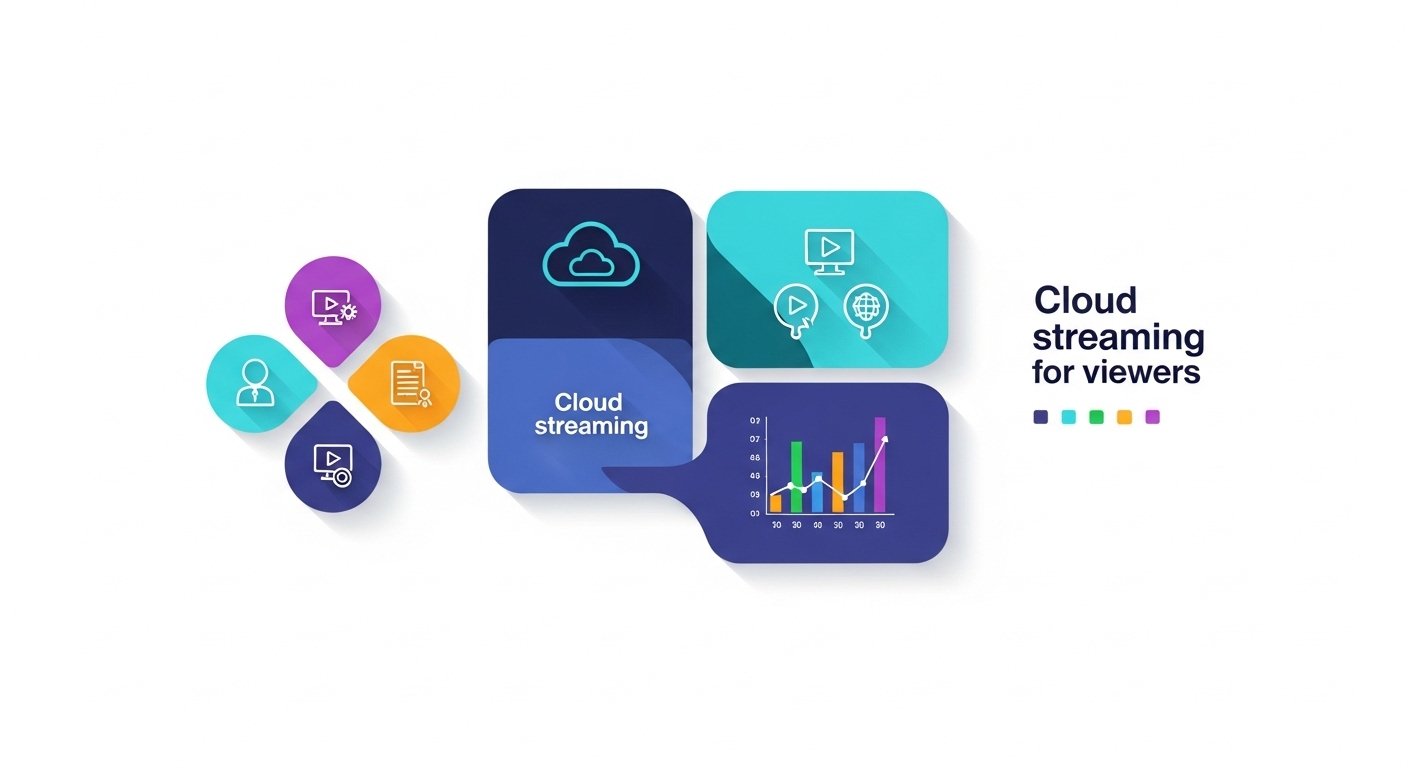
At its core, cloud streaming technology refers to the process of delivering video and audio content over the internet using a network of remote servers hosted by cloud providers like Amazon Web Services (AWS), Google Cloud, or Microsoft Azure. This is a significant departure from the old model, where a media company would have to own and maintain its own physical servers in a dedicated data center.
Think of it like this: instead of building a commercial kitchen from scratch to cook a single meal, you're using a state-of-the-art, shared kitchen with unlimited space and every possible appliance, paying only for what you use. This approach gives streaming services immense flexibility, power, and scale.
These cloud platforms provide the raw computing power, storage, and networking. Then, specialized media technology companies build the software layer on top, creating the tools that broadcasters and OTT (Over-The-Top) services use to manage, process, distribute, and monetize their content. The success of these software providers signals a massive industry shift towards this more efficient and powerful model.
The Pillars of a Better Streaming Experience
The adoption of cloud streaming technology directly enhances the viewing experience in several key ways. These improvements are the reason why streaming today is vastly superior to what it was a decade ago.
Enhanced Reliability and Less Buffering
The dreaded buffering wheel is every streamer's worst enemy. Cloud infrastructure is designed to minimize it. Because content is stored and distributed across a global network of servers, the system can intelligently send the stream from a server that is geographically closest to you, reducing latency. Furthermore, cloud platforms offer incredible scalability. During a major live event like the Super Bowl, the system can automatically scale up its resources to handle millions of simultaneous viewers without crashing. If one server fails, traffic is instantly rerouted to a healthy one, a process known as redundancy, ensuring the stream continues uninterrupted.
Superior Picture and Sound Quality
Delivering crystal-clear 4K HDR video and immersive Dolby Atmos sound requires immense processing power. Cloud servers handle the heavy lifting of video transcoding—the process of converting a master video file into various formats and quality levels. This enables a crucial feature called Adaptive Bitrate Streaming (ABS). Your streaming app constantly communicates with the server, automatically selecting the highest quality stream your internet connection can handle at that moment. If your Wi-Fi signal weakens, it seamlessly switches to a lower-resolution version to avoid buffering, then switches back up when the connection improves.
No credit card required • Instant activation
Accelerated Innovation and New Features
Because the infrastructure is software-based, streaming providers can develop and roll out new features faster than ever. In the past, adding a new feature might have required purchasing and installing new hardware, a slow and expensive process. With the cloud, developers can push updates, fix bugs, and experiment with new ideas—like interactive polls, multiple camera angles for sports, or personalized content recommendations—almost instantly. This agility means the services you use are constantly evolving and improving.
How Cloud Tech Impacts Your Streaming Choices
While most major streaming services leverage the cloud, the quality of their implementation can vary. Services that invest heavily in a modern, robust cloud architecture are more likely to provide a stable, high-quality experience, especially for demanding content like live sports. When you're evaluating a legal IPTV service, for example, the underlying technology is a critical factor in its performance.
To understand the difference a modern, legal IPTV platform can make, exploring the setup process can be an enlightening first step. If you're curious about how to get started with a legitimate service, you can learn more by exploring a free trial and experiencing the benefits firsthand.
The table below highlights the key differences between legacy systems and modern cloud-based approaches.
| Feature | Traditional Infrastructure | Cloud Streaming Technology |
|---|---|---|
| Scalability | Limited by physical hardware; difficult to handle sudden traffic spikes. | Elastic; automatically scales to millions of users and back down. |
| Reliability | A single point of failure can cause a major outage. | High redundancy; traffic is rerouted automatically if a server fails. |
| Global Reach | Requires building data centers in different regions; expensive and slow. | Utilizes existing global network of cloud providers for low-latency delivery. |
| Feature Updates | Slow and infrequent; often tied to hardware replacement cycles. | Rapid and continuous; software updates can be deployed in minutes. |
| Video Quality | Limited processing power for advanced codecs and adaptive bitrates. | Massive power for 4K/HDR transcoding and efficient adaptive streaming. |
The Future of Streaming: What's Next?
The innovation driven by cloud technology is far from over. We are heading towards an even more personalized and interactive future. Expect to see ultra-low latency streams that bring live sports and events closer to real-time, reducing the delay between the live action and what you see on screen. Artificial intelligence, running on the cloud, will offer hyper-personalized content recommendations, creating ‘channels' tailored specifically to your interests.
Furthermore, the line between streaming and gaming will continue to blur, with cloud gaming services allowing you to play high-end video games through your smart TV or streaming device, no console required. All of these advancements are made possible by the scalable and powerful nature of the cloud.
Frequently Asked Questions
1. Is cloud streaming the same as IPTV?
Not exactly, but they are closely related. IPTV (Internet Protocol Television) is a broad term for delivering television content over an IP network. Cloud streaming is the modern infrastructure used to power the most advanced and reliable legal IPTV and OTT services. In short, the best IPTV services today run on cloud streaming technology.
2. Why do I still get buffering if my service uses cloud technology?
While the cloud backend is a huge part of the equation, it's not the only one. Buffering can still be caused by issues within your own home network, such as a weak Wi-Fi signal, an overloaded router, or interference from other devices. It can also be caused by slowdowns from your Internet Service Provider (ISP) or an underpowered streaming device that can't process the video fast enough.
3. Does cloud streaming use more data?
Not inherently. Cloud streaming enables services to offer much higher quality options, like 4K, which do use more data. However, features like Adaptive Bitrate Streaming can actually help manage data usage by automatically dropping to a lower quality to prevent stalling, rather than trying to force a high-bitrate stream over a poor connection.
4. How does cloud technology make streaming more secure?
Major cloud providers like AWS and Google Cloud invest billions in security. They have dedicated teams to protect against common threats like DDoS attacks, which can take a service offline. This level of security is far greater than what most individual media companies could achieve on their own, helping protect both the service's stability and your user data.
Ultimately, the continued advancement of cloud streaming technology is a win for everyone. It empowers creators and distributors to deliver their content more efficiently and reliably, and it provides viewers with a richer, more stable, and feature-packed entertainment experience. The next time you enjoy a flawless 4K movie or a live event without a single buffer, you'll know the power of the cloud is hard at work behind the screen.
Disclaimer: FusionClubTV publishes educational content about legal streaming, IPTV technology, and device setup. We do not promote piracy, illegal IPTV subscriptions, cracked apps, unauthorized streams, or bypassing paid access.