Navigating Streaming Subscriptions & Pricing Changes: A Consumer’s Guide
The landscape of digital entertainment is in constant motion. One day you have a perfectly curated set of streaming services, and the next, you receive an email announcing a price hike or a change in plan structure. These shifts can be frustrating, but they are a fundamental part of the streaming industry. Understanding the mechanics behind these decisions is the first step toward becoming a more empowered consumer.
No credit card required • Instant activation
This guide will demystify the world of legal streaming subscriptions, explain the common pricing models you'll encounter, and break down the reasons behind the frequent streaming subscriptions pricing changes. Our goal is to provide you with the tools to evaluate the true value of your subscriptions and make confident decisions about where you spend your money.
The Anatomy of a Streaming Subscription
Not all streaming services are built the same. Legal platforms use several distinct business models to deliver content to your screen. Understanding these categories helps you align your viewing habits with the right type of service.
SVOD (Subscription Video on Demand)
This is the most common model. You pay a recurring monthly or annual fee for unlimited access to a large catalog of content. Think of services like Netflix, Disney+, and Amazon Prime Video. The primary benefit is an ad-free experience (on premium tiers) and the ability to binge-watch entire seasons at your leisure.
AVOD (Advertising-based Video on Demand)
AVOD services are free to use but are supported by advertisements, similar to traditional broadcast television. Platforms like Tubi, Pluto TV, and The Roku Channel offer a surprising amount of content without asking for a credit card. They are an excellent way to supplement your paid subscriptions without increasing your monthly budget.
TVOD (Transactional Video on Demand)
With TVOD, you pay for specific content on a rental or purchase basis. Services like Apple TV's store and Google Play Movies use this model. It's ideal for watching new movie releases that aren't yet on SVOD platforms or for accessing a film you only want to see once without committing to a full subscription.
Hybrid and Lifetime Models
Many services now offer hybrid models, such as cheaper subscription tiers that include ads. This gives consumers more choice. A much rarer model is the ‘Lifetime Pass,' where a user pays a large, one-time fee for perpetual access. While appealing, these lifetime offers carry the inherent risk that the service could change its terms, be acquired, or shut down in the future, making the long-term value uncertain.
Why Do Streaming Subscription Prices Change?
It's a common question: why do my streaming bills keep going up? The frequent streaming subscriptions pricing changes are driven by several powerful economic factors that shape the entire industry.
- Content Licensing and Production Costs: The biggest driver is content. Licensing popular movies and TV shows from other studios is incredibly expensive, and these deals have expiration dates. Furthermore, creating exclusive original content—a key strategy for attracting and retaining subscribers—requires massive upfront investment in production.
- Technology and Infrastructure: Delivering high-quality 4K HDR streams to millions of users simultaneously requires a robust and costly global infrastructure of servers and data centers. Continuous investment is also needed to improve app performance, develop new features, and enhance security.
- Market Competition: With dozens of services competing for your attention, companies often adjust pricing to gain a competitive edge or to reflect a change in their perceived value compared to rivals.
- Economic Inflation: Like any business, streaming services are subject to general economic inflation, which increases their operational costs for everything from employee salaries to software licenses.
How to Evaluate the Value of a Streaming Service
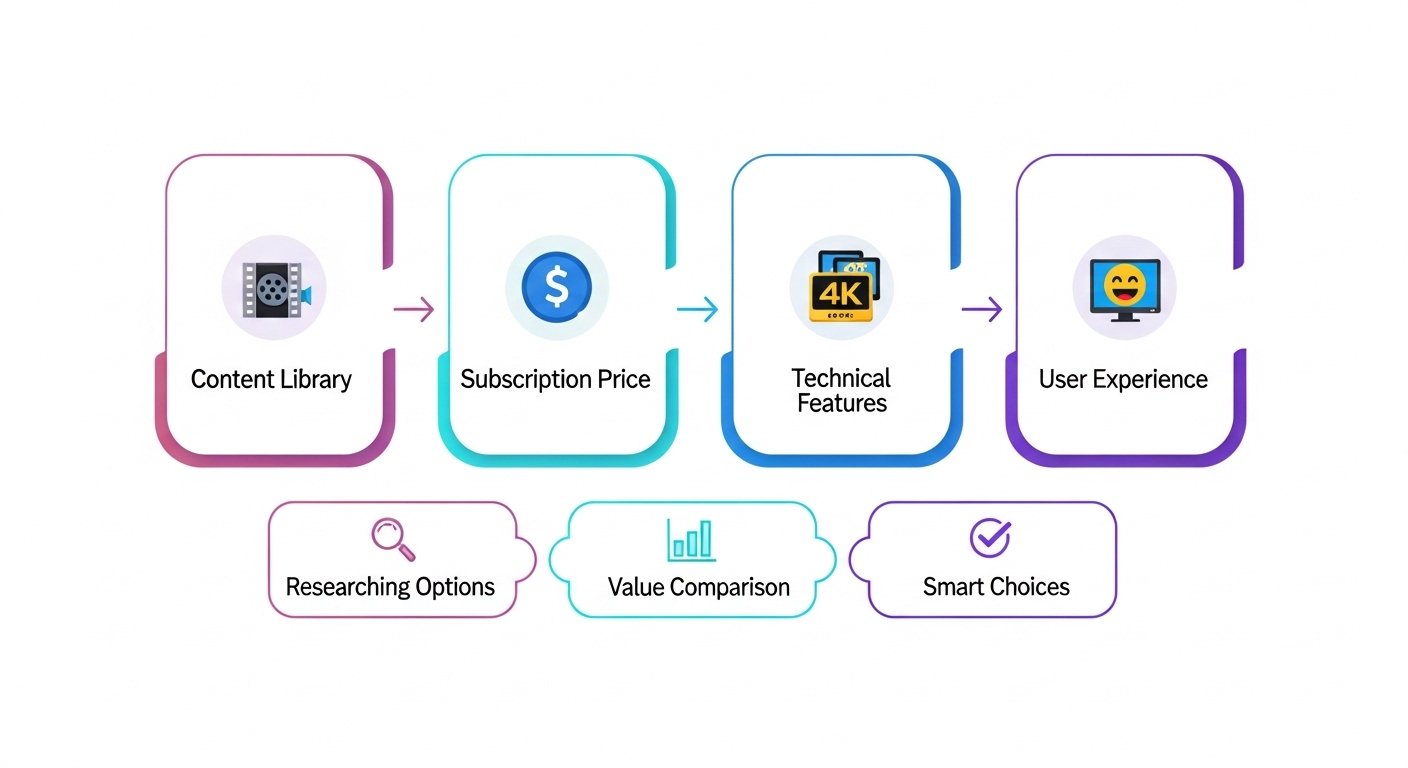
A service's price tag is only part of the equation. True value is subjective and depends entirely on your needs and viewing habits. Before you subscribe—or when you're deciding whether to keep a service—ask yourself these questions:
- Content Library: Does the service have a deep catalog of content you genuinely want to watch? Is it focused on movies, TV series, documentaries, or a mix?
- Usage Frequency: How many hours a week will you actually use it? A $20/month service you use daily offers more value than a $10/month service you open once a month.
- Technical Features: Does it support the features your hardware can handle, like 4K Ultra HD, HDR, and Dolby Atmos? How many simultaneous streams are allowed? Can you download content for offline viewing?
- User Experience: Is the app well-designed and easy to navigate on your primary devices, such as your Fire TV, Android TV box, or smart TV?
No credit card required • Instant activation
To help organize your thoughts, use a simple comparison table. This can provide a clear, at-a-glance view of what you're paying for.
| Service | Monthly Cost | Key Features (4K, # Streams) | Primary Content Focus | My Personal Value Rating (1-5) |
|---|---|---|---|---|
| Example: Netflix | $15.49 | Yes, 4 Streams | Original Series & Movies | 4 |
| Example: Tubi | $0 | HD, N/A | Licensed Movies & TV | 5 |
Understanding Your Rights as a Streaming Consumer
While streaming services hold the right to alter their pricing, consumers are not without power or protection. Transparency is a key component of a fair marketplace.
Most importantly, services are required to provide you with advance notice of any price increases. This gives you time to re-evaluate the service's value and decide whether to accept the new price or cancel your subscription. The Federal Trade Commission (FTC) has guidelines that require businesses to provide clear and conspicuous disclosures about automatically renewing subscriptions.
It's also wise to occasionally review the Terms of Service (ToS) for your subscriptions. While often lengthy, these documents outline the rules for both you and the provider, including the terms under which they can modify pricing. The greatest power you have as a consumer in the streaming world is the freedom to vote with your wallet. Unlike long-term cable contracts of the past, most legal streaming services can be cancelled with just a few clicks, allowing you to easily rotate services based on your current interests and budget. Learning about the vast array of legal streaming setup options can open up new possibilities for entertainment without being locked into a single provider.
Frequently Asked Questions
1. Can a streaming service raise its price without telling me?
Generally, no. Reputable services are legally and ethically obligated to notify you of a price change before your next billing cycle. This notification usually comes via email, giving you the opportunity to cancel if you do not agree to the new rate.
2. What are the pros and cons of a ‘lifetime' subscription?
The main pro is the potential for massive long-term savings if you are a dedicated user of the service. The cons, however, are significant. You are betting that the service will remain valuable to you for many years and that the company itself will continue to operate and support the platform. It's a higher-risk, higher-reward option compared to a standard monthly plan.
3. How can I save money on my streaming subscriptions?
There are several effective strategies. You can opt for cheaper, ad-supported tiers, pay for an annual plan instead of monthly to get a discount, or ‘rotate' your subscriptions by cancelling one and starting another for a few months to catch up on its content. You can also lean more heavily on free AVOD services. For more ideas, check out resources from trusted publications like CNET on managing streaming costs.
4. Are all free streaming apps legal and safe?
No. While legitimate AVOD services like Pluto TV, Tubi, and Freevee are perfectly legal and safe, the internet is filled with unofficial apps that promise free access to paid content. These apps often pose significant security and privacy risks and engage in copyright infringement. Stick to apps found in the official Amazon, Google Play, or Apple app stores.
Making Smart Choices in a Dynamic Streaming World
The streaming industry will continue to evolve, and with that evolution will come more streaming subscriptions pricing changes. By understanding the different subscription models, the economic forces at play, and how to critically evaluate a service's value, you can navigate this landscape with confidence. Remember to regularly audit your subscriptions, take advantage of the flexibility that legal services offer, and align your spending with your actual viewing habits. The power to choose, cancel, and switch remains firmly in your hands.
FusionClubTV publishes educational content about legal streaming, IPTV technology, and device setup. We do not promote piracy, illegal IPTV subscriptions, cracked apps, unauthorized streams, or bypassing paid access.